• November 6, 2026 · Motion & Video · 5 min read
Video Editing Services Explained: What Is Included, What It Costs and How Long It Takes
Video editing services explained: what is included, what drives cost and turnaround, what to send an editor and how revisions work, in plain words.
Key takeaways
- Video editing services turn raw footage into a finished video: cutting, colour, sound, music, titles and the right export files.
- Cost and time depend on finished length, the amount of footage, graphics work, versions and revision rounds.
- Send the editor everything together: footage, brief, brand files, music permission, references and the deadline.
- Give feedback in one list with timestamps, from one decision-maker, so revisions stay quick.
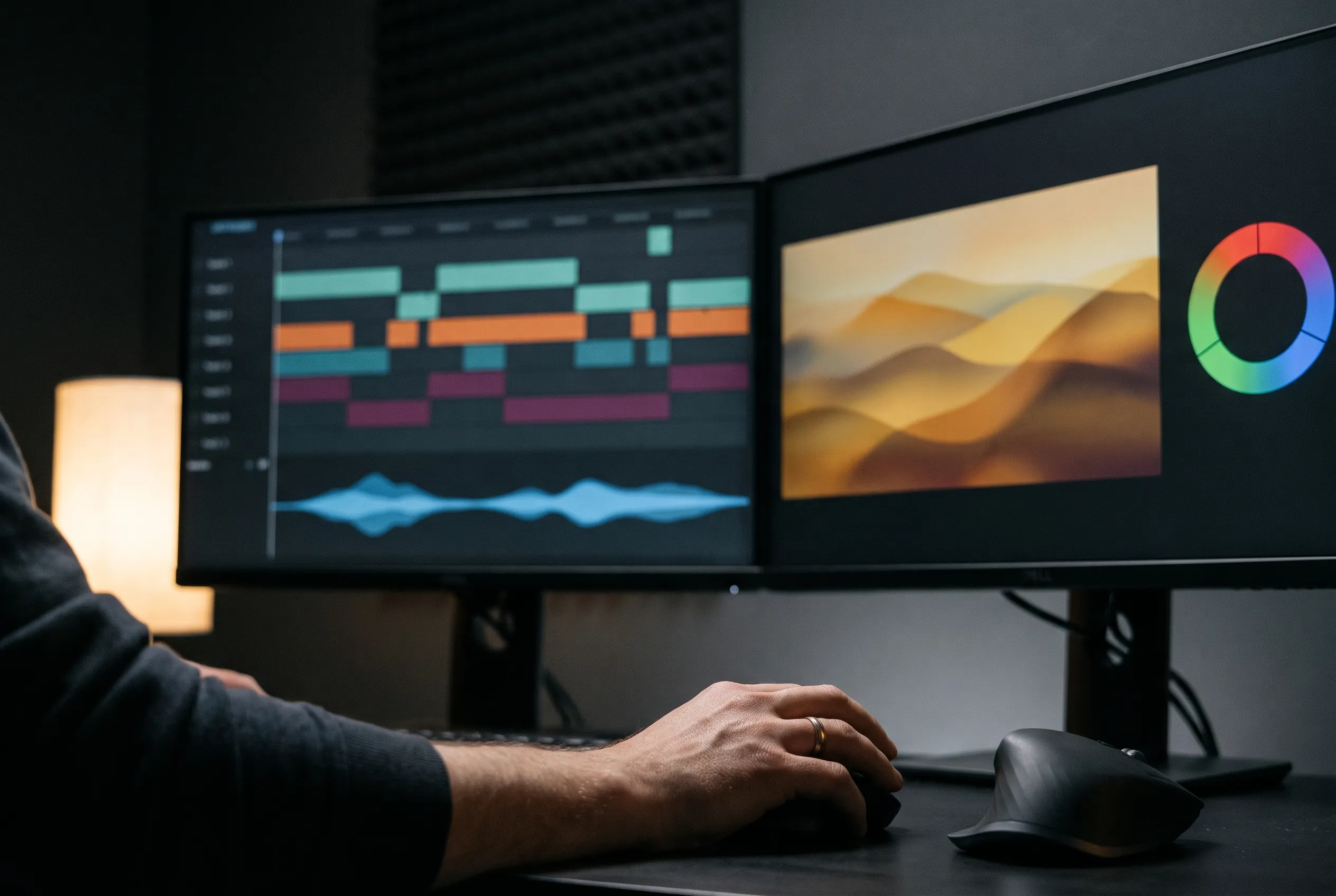
Video editing services take your raw footage and turn it into a finished video: cutting the best moments, fixing colour and sound, adding music, titles and captions, and exporting the right files. Cost and time depend on four things: how long the video is, how much footage there is, how much graphics work it needs and how many rounds of changes you want.
Take a cooking channel in Karimnagar that films two hours of footage for one eight-minute recipe, and a school that wants a four-minute annual-day highlight. Both need editing, but the work, and the quote, are very different. This guide shows what is inside the service, so you can compare offers on equal terms.
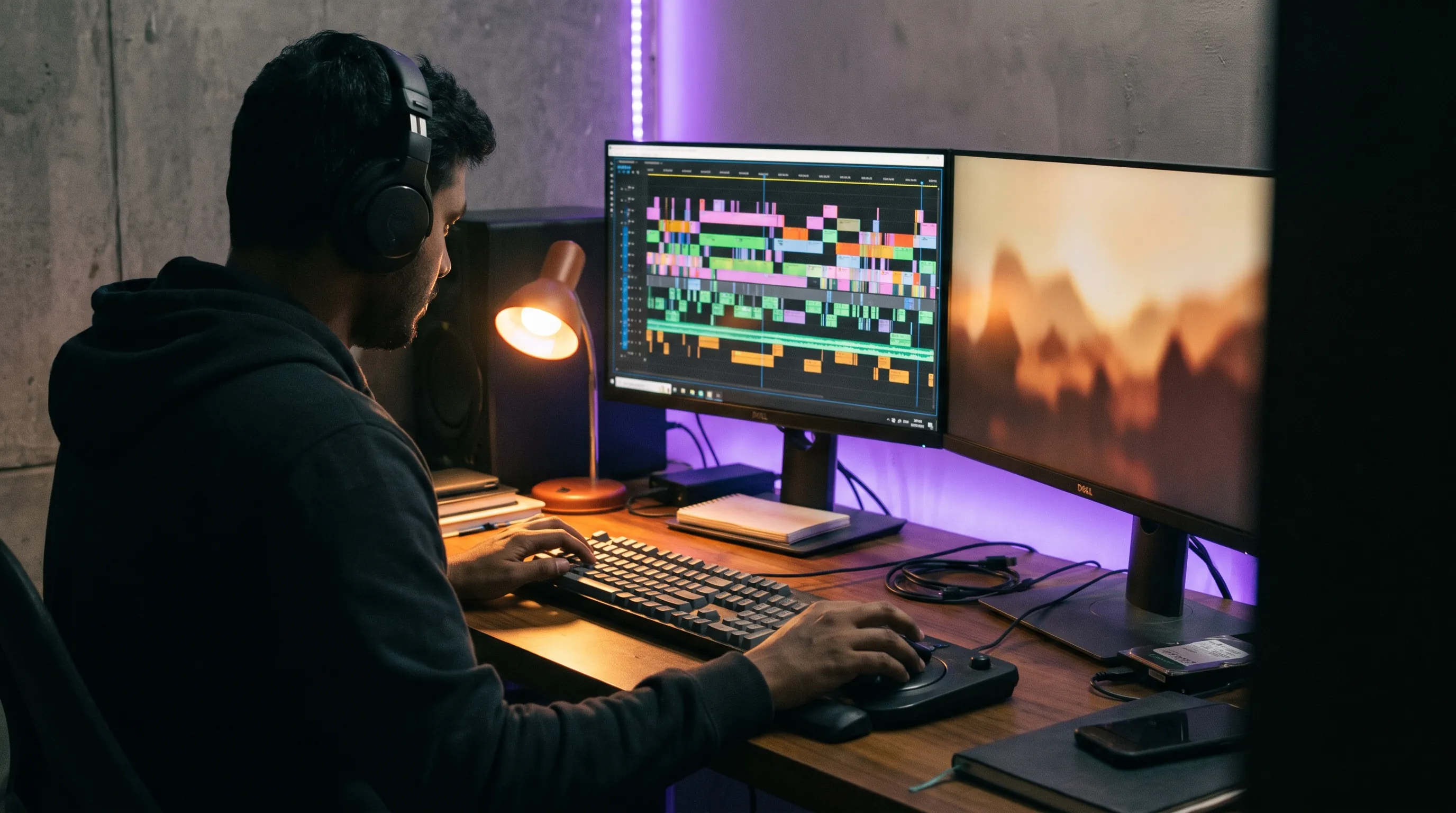
What video editing services include
- Organising the footage: sorting clips, picking the best takes and syncing separate audio.
- Rough cut: a first version that sets the story and order.
- Fine cut: tightening pace, trimming pauses and fixing transitions.
- Colour correction and grading: making shots look natural and consistent, then adding a chosen look.
- Audio: cleaning noise, balancing voice and music, adding sound effects.
- Titles, captions and graphics: names, lower thirds, subtitles and logo.
- Export: final files in the sizes and formats each platform needs.
Kinds of video, and what editing each one needs
- 01
Reels and Shorts
Vertical 9:16 videos with fast cuts, big captions and tight hooks. Many edits per minute, short turnaround.
- 02
YouTube videos
Longer stories with a hook, pacing, chapters, thumbnails and end screens. The amount of raw footage is often large.
- 03
Corporate and product films
Scripted, polished work with interviews, graphics, music and strict brand rules.
- 04
Events and weddings
Many hours of footage cut into a highlight, with music and sometimes several cameras to sync.
- 05
Courses and lectures
Long recordings cleaned, trimmed, captioned and branded for a learning platform.
Each kind has its own guide: see reel editing tips, corporate video for small business and our piece on video marketing for colleges and schools.
What decides the cost of video editing services?
Price follows time. More footage means more hours reviewing it, and more graphics and sound design means more hours building them. Published rates vary widely and mostly come from agency blogs, so use them as a rough map. One Pune agency's guide shows how hourly rates differ between a fresh freelancer and an established agency, and how a short explainer is priced by scope. Your quote should say what is included, not only the total.
- Finished length of the video.
- Raw footage: how much, and how well it was shot.
- Graphics, motion text and effects.
- Colour grading and sound design.
- Versions: landscape and vertical, long and short.
- Revision rounds included.
- Turnaround: a rush job costs more.
Ask the editor to state what the quote assumes, for example one three-minute video, one version and two rounds of changes. That one sentence makes any later request, such as a vertical cut for Reels, easy to price.
How long does video editing take?
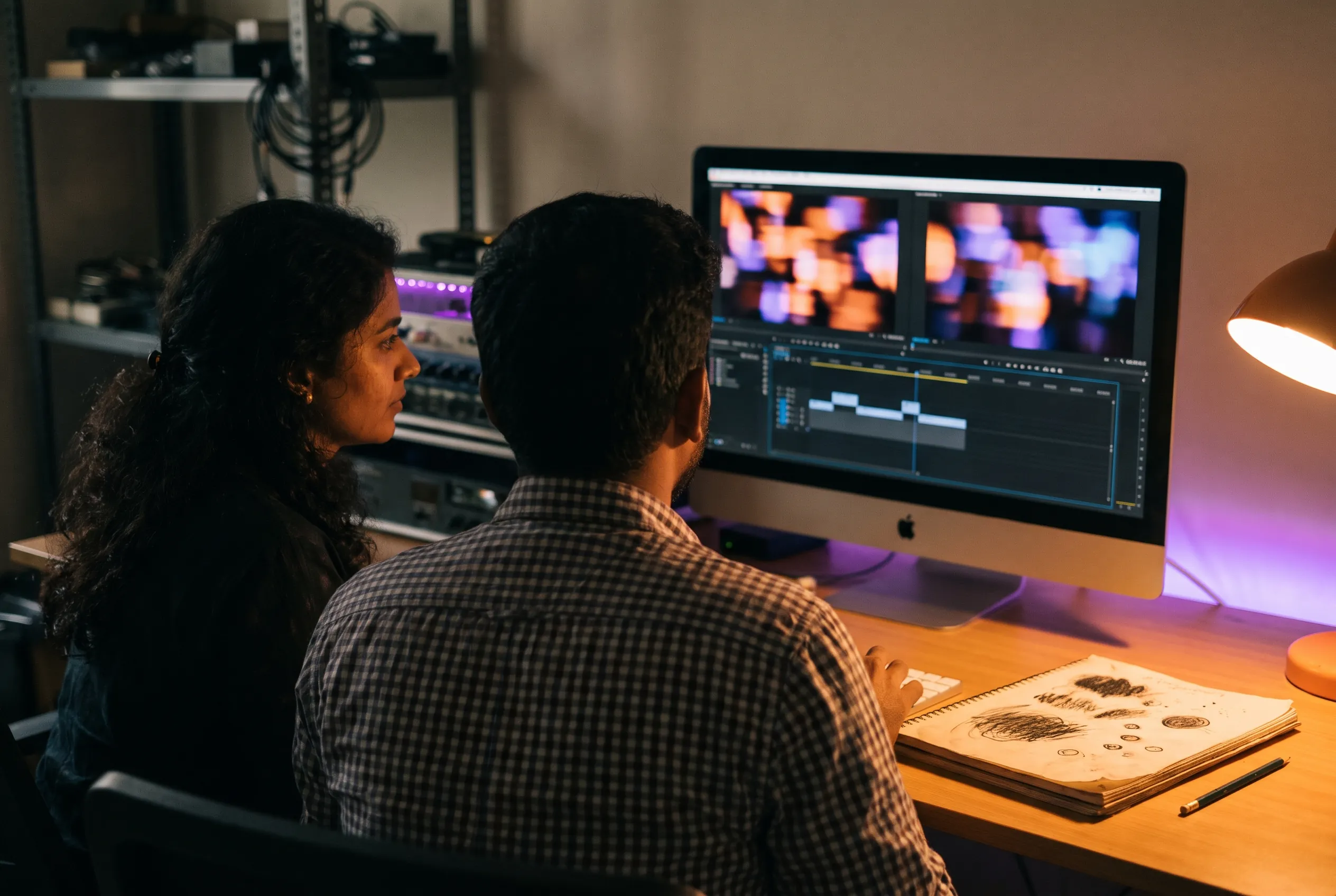
Time depends on the same drivers. A short reel with simple cuts can often move quickly. A multi-camera event film, or a corporate video with graphics, needs more days. Good editors work in stages, rough cut, fine cut and finishing, and share each one so you can correct the direction early.
The biggest hidden delay is slow feedback. A video that waits three days for your comments takes three days longer. At Newfangled Mind the video packages, from Basic to Luxury, state turnaround, number of revisions and deliverables before you start. See the video and motion design service for the full list.
What to send your editor
Checklist
Send this with your footage
- All raw clips in one shared folder, named by day or scene
- A short brief: purpose, audience, length and tone
- A script, voice-over or a list of key moments
- Logo files, brand colours and fonts
- Music you are allowed to use, or ask the editor to suggest some
- Two reference videos you like
- Where it will be published: YouTube, Instagram, an event screen
- The deadline, and who approves
Take care with music. Popular film songs in a business video can lead to the video being muted, blocked or claimed. Use licensed or royalty-free tracks, and tell the editor so they do not drop in a copyrighted song as a placeholder.
Footage shot with editing in mind saves time. Record a few seconds before and after each take, capture clean sound, hold shots steady and film extra pictures of the place or product to cut away to. A good editor can rescue weak footage, but every fix is paid time.
Formats and files: what you should receive
Landscape videos for YouTube and screens are usually 1920 x 1080 pixels (16:9), and vertical videos for Reels and Shorts are 1080 x 1920 (9:16). The most widely accepted export is an MP4 file with H.264 compression, a codec, which is the method used to shrink video. It plays on phones, laptops and most platforms.
Frame rate is the number of pictures per second. It should usually match the footage as shot, often 24, 25 or 30, because changing it can make motion look odd. For silent viewing, ask for a version with captions built in, plus a separate SRT subtitle file.
Share the original files through a cloud drive or a hard drive. Sending clips through WhatsApp recompresses them and lowers their quality, and the editor cannot bring the sharpness back. If the folder is large, send it in batches and tell the editor which clips matter most.
How revisions work, and how to give feedback
Do
- Watch the whole cut once, then write all changes in one list
- Use timestamps: "at 01:12 shorten the pause"
- Say what you want it to feel like, not only what to change
- Send feedback from one decision-maker
Avoid
- Sending comments over several days from several people
- "Make it more energetic" with no example
- Asking for a new storyline after the fine cut
- Changing the brief after editing has started
If your video starts with a logo, our note on why five seconds of logo animation matter may help, and you can see how we scope every project on the pricing page.
Frequently asked questions
How much do video editing services cost in India?
Rates vary widely. One Pune agency's guide lists fresh freelancers at about ₹300 to ₹500 an hour and large agencies at ₹1,500 to ₹3,000 an hour. Per project, price follows length, footage, graphics and revisions, so compare what each quote includes.
How long does it take to edit a video?
It depends on length, the amount of footage, graphics and how fast you give feedback. A simple reel can move quickly, while a multi-camera event film or corporate video takes more days. Ask for a schedule by stage: rough cut, fine cut and finish.
What is the difference between a rough cut and a final cut?
A rough cut sets the story and the order of shots without polish. The final cut has tightened pacing, corrected colour, balanced sound, music, titles and captions. Reviewing the rough cut early is the cheapest time to change direction.
Should I give the editor all my raw footage?
Yes, with a short brief and a note of the key moments. Name or sort clips by day or scene. The editor can then find the best takes quickly, and you avoid paying for time spent searching or asking for missing clips.
Which file format should I ask for?
An MP4 file with H.264 compression plays almost everywhere. Ask for 1920 x 1080 for landscape and 1080 x 1920 for vertical videos, and a separate SRT file if you want subtitles you can edit or upload to a platform.
Tags
- Video editing services
- Video editing
- Post-production
- Reels
- YouTube editing
- Karimnagar
- Telangana

Written by the Newfangled Mind studio
Designers, motion artists and editors in Karimnagar, Telangana: 3,500+ projects for 100+ clients.